
Shoulder Pain
Common causes of shoulder pain
There are several possible reasons for shoulder discomfort, including:
- Rotator Cuff Injuries – Tears, overuse or degeneration of the muscles and tendons supporting the shoulder.
- Frozen Shoulder (Adhesive Capsulitis) – A condition that severely limits your range of motion.
- Shoulder Impingement – When tendons are compressed during overhead movements.
- Poor posture and control
- Tendinitis or Bursitis – Inflammation from repetitive use or strain.
- Joint Instability or Dislocation – Often caused by injury.
- Osteoarthritis – Degeneration of the joint over time.
How can we help?
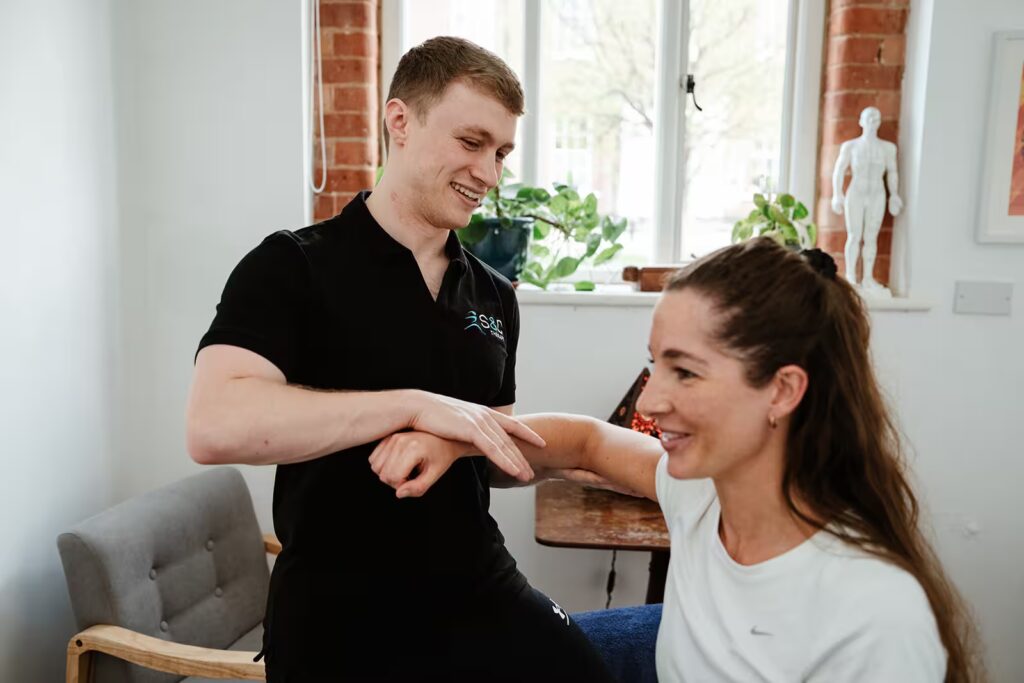
At S&C Therapy, we specialise in diagnosing and treating shoulder pain, whether it’s due to joint instability, muscle strain, rotator cuff issues, poor posture, or overuse injuries. A thorough assessment of the shoulder joint, surrounding muscles, and movement mechanics is conducted to identify the exact cause of your discomfort.
The most suitable treatment option is then determined, usually involving hands-on and targeted therapy – using techniques such as shoulder joint mobilisation, trigger point therapy, and soft tissue release to reduce pain and restore mobility. This is combined with a personalised rehabilitation plan focused on achieving long-term results, strengthening and improving shoulder stability, posture, and range of motion.
Practical guidance on daily habits, work positions, and movement patterns that may be contributing to your symptoms is also provided to help you avoid further strain.
Our goal is to relieve your shoulder pain, restore natural function, and support long-term shoulder health, so you can return to work, exercise, and everyday life with confidence and ease.
If you aren't ready to book an appointment try these self help techniques at home first to help with your shoulder pain
- Rest – Avoid painful movements but stay gently mobile.
- Cold Therapy – Apply ice packs to reduce inflammation and pain.
- Posture Adjustments – Keep your shoulders relaxed and back, especially at a desk.
- Gentle Mobility Exercises – Light stretches like pendulum swings can help maintain range.


