About Shockwave Therapy
Shockwave Therapy delivers high-energy acoustic waves through a specialist handpiece to stimulate healing at a cellular level. It increases blood flow, encourages tissue regeneration, supports collagen production, and activates the body’s natural pain-relief mechanisms.
Shockwave therapy addresses the root cause of your problem, promoting long-term recovery. This treatment is not invasive, and requires little to no downtime, making it a convenient and effective solution for chronic musculoskeletal injuries.

What to Expect from Your Shockwave Appointment
Initial Physio Assessment
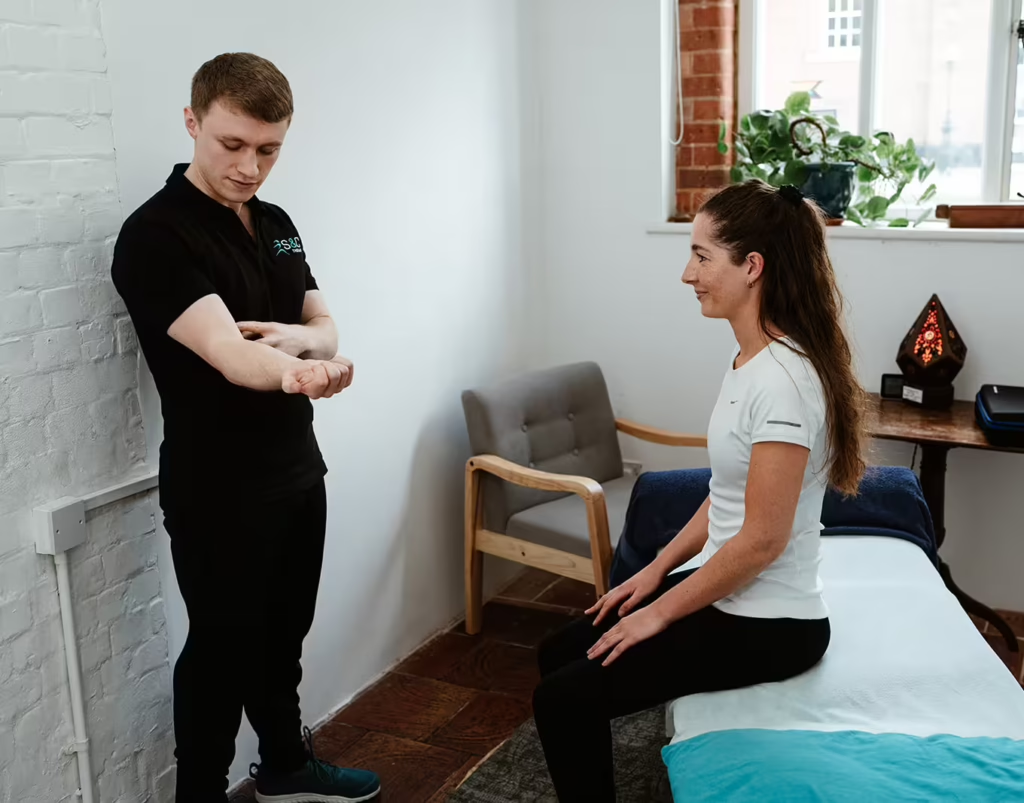
Before starting Shockwave Therapy, you’ll meet with your physiotherapist. This helps us understand your condition fully and ensures Shockwave is the best way to support your healing and recovery.
How Shockwave Works
Shockwave Therapy uses sound waves to target the injured area. These waves increase blood flow, support tissue repair, and activate the body’s natural pain-relief processes, helping to reduce pain in the short term and promote long-term healing of the affected tissues.
Treatment Process
Your therapist will apply ultrasound gel to the area and use a handheld device to deliver the shockwaves with gentle pressure. The sound waves stimulate blood flow and kickstart the body’s natural healing response, which is often slowed down in chronic conditions.
Sessions & Recovery
Shockwave Therapy usually comes in packages of 3 or 6 sessions, depending on your needs. This mirrors the effective dosages that have been identified in clinical research studies. Generally the treatment will provide a reduction of pain in the short term, however the main goal is to accelerate healing of dysfunctional tissues, which usually happens over a course of around 3 months.
Common Issues Treated with Shockwave Therapy
- Achilles Tendinopathy - Pain and stiffness in the Achilles tendon.
- Plantar Fasciitis - Heel pain caused by inflammation of the plantar fascia.
- Patellar Tendinopathy - Pain below the kneecap, often linked to overuse.
- Shin Splints - Pain along the shinbone from repetitive stress.
- Tennis or Golfer’s Elbow - Pain around the elbow caused by repeated movements.
- Gluteal Tendinopathy - Pain at the bony point on the outside of the hip.
- Calcific Tendinopathy - Build up of calcium deposits in tendons.
- Muscular Trigger Points - Areas of muscle tightness, often treated with shockwave therapy alongside tendon problems.
- Other Chronic MSK Injuries - Including shoulder, hip, or back pain from overuse or injury.
Who Can Benefit
Shockwave Therapy can help with chronic musculoskeletal pain, from sports-related injuries to long-standing joint or tendon problems. It’s suitable for athletes, active individuals, and anyone experiencing the problems highlighted above.
Benefits of Shockwave Therapy
- Non-invasive
- Targets the root cause of pain, not just symptoms
- Supports long-term tissue repair and regeneration
- Short treatment sessions with little to no downtime
- Can improve mobility and function
Shockwave Therapy FAQs
Your Questions, Answered
Does Shockwave Therapy hurt?
You may feel mild discomfort during the session, which is normal. Treatment will only be completed within your pain tolerance.
How long does each session take?
Each treatment typically lasts 5-10 minutes.
How many sessions will I need?
Most people benefit from a package of 3 or 6 sessions, depending on the severity of the condition. You must book an initial physiotherapy appointment first so that we understand the problem and ensure that this is the right treatment for you.
Can I continue daily activities after treatment?
Yes, recovery is generally quick, and most people return to work or daily activities quickly. We will guide you on appropriate activities to complete following treatment.
Is Shockwave Therapy safe?
Yes, it is a clinically supported, non-invasive treatment when performed by a trained physiotherapist. We will discuss any precautions with you prior to treatment.
What should I expect during the session?
You will feel a series of pulses or vibrations applied to the affected area. Some discomfort can occur, but it is usually well-tolerated and treatment will be completed only within your pain tolerance.
Are there any side effects?
Minor redness, swelling, or bruising at the treatment site can sometimes occur, but are rare and typically resolve within a few days. We will clear any contraindications with you prior to treatment.
Who should avoid Shockwave Therapy?
You should consult your therapist before treatment if you take blood thinners or have blood clotting disorders, have local tumors, wounds or infections at the treatment site, or if you are pregnant.
Testimonials
Inspiring stories of health and healing
 Trustindex verifies that the original source of the review is Google.

 Trustindex verifies that the original source of the review is Google.
 Trustindex verifies that the original source of the review is Google.
 Trustindex verifies that the original source of the review is Google.
 Trustindex verifies that the original source of the review is Google.
 Trustindex verifies that the original source of the review is Google.
 Trustindex verifies that the original source of the review is Google.
 Trustindex verifies that the original source of the review is Google.
 Trustindex verifies that the original source of the review is Google.

 Trustindex verifies that the original source of the review is Google.
